Mailchimp changed the game when they removed their generous free tier and started charging more for basic features. If you're tired of monthly fees eating into your budget, or you're concerned about data privacy, self-hosted email marketing tools are the answer.
I've tested dozens of open source alternatives over the past year. Here are the ones that actually work.
Why Switch to Self-Hosted Email Marketing?
Before diving into the tools, let's address why self-hosting makes sense:
Cost savings are real. Mailchimp charges $20/month for 500 contacts on the Standard plan. With 10,000 subscribers, you're looking at $100+/month. Self-hosted solutions cost you only server fees, typically $5-20/month regardless of list size.
Your data stays yours. No third party has access to your subscriber information. This matters for GDPR compliance and for anyone who values privacy.
No feature restrictions. Most self-hosted tools give you everything upfront. No paywalled features, no "upgrade to unlock" messages.
No sending limits. You control how many emails you send. Connect your own SMTP provider and scale as needed.
The Best Self-Hosted Mailchimp Alternatives
1. Maillayer (Recommended)
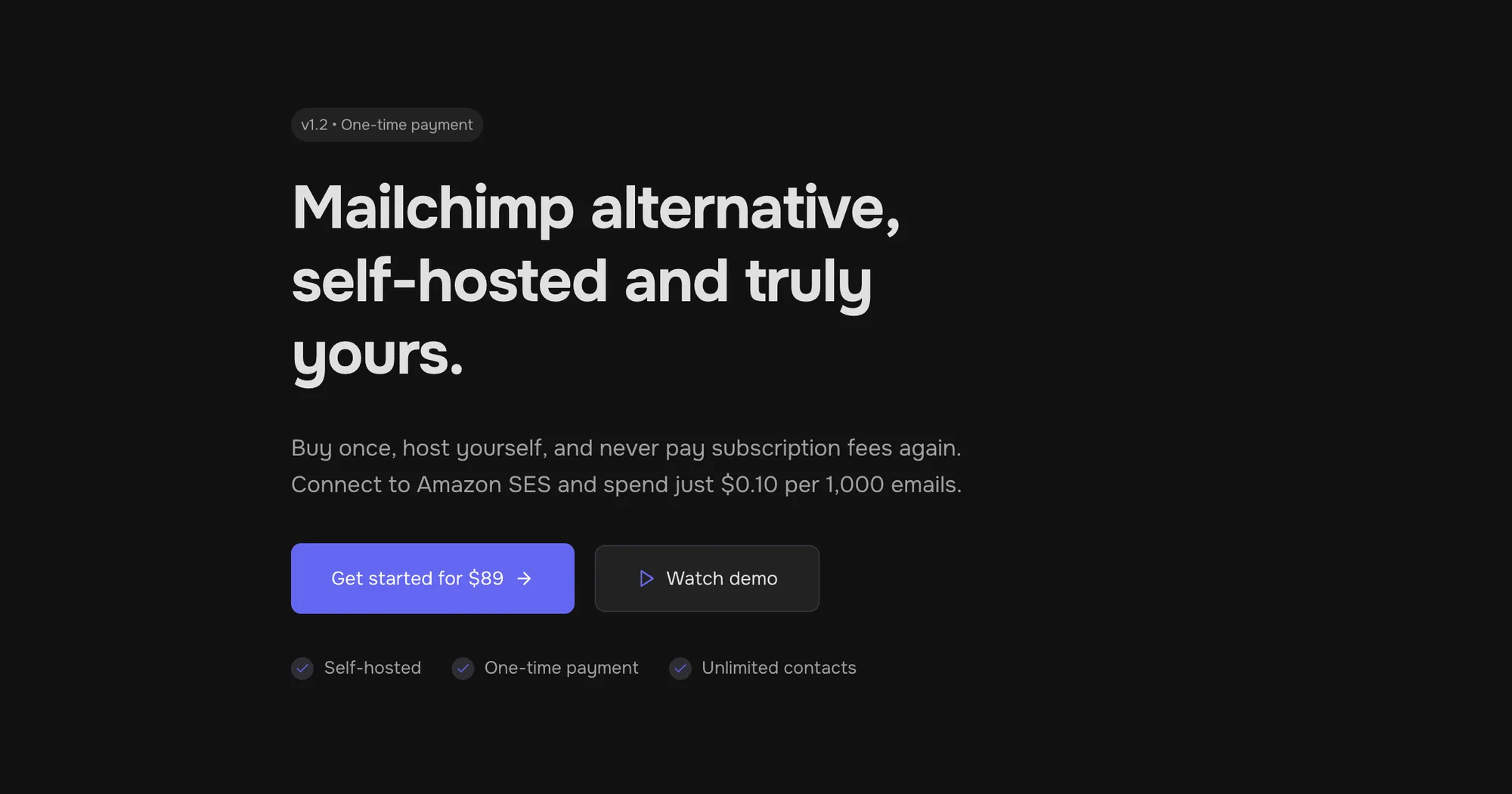
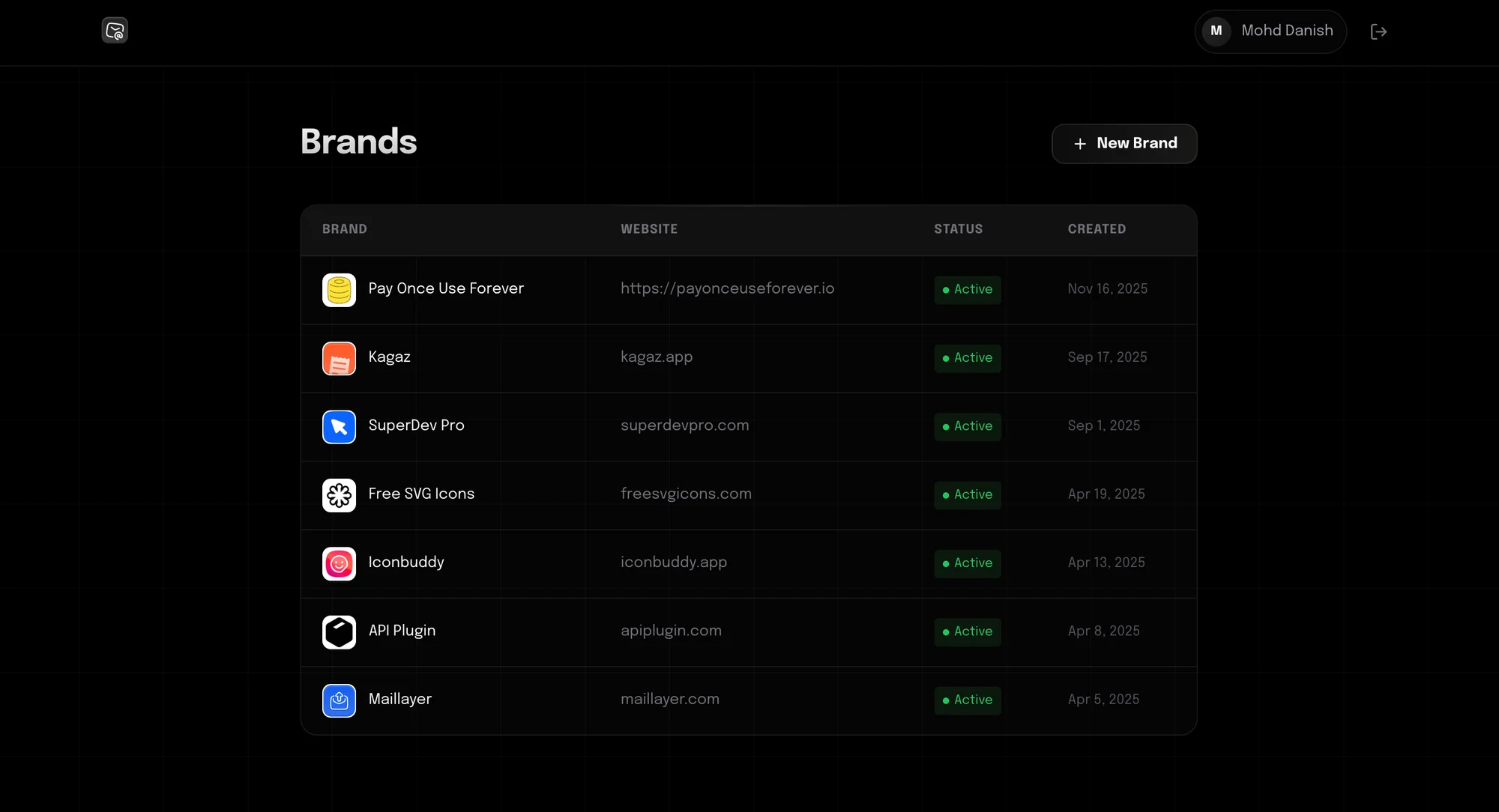
If you want the easiest path from Mailchimp to self-hosted, Maillayer is it. It's built specifically for marketers who don't want to wrestle with technical complexity but still want full ownership of their email marketing.
What makes it stand out:
One-time license fee, no monthly subscriptions ever
Modern, intuitive interface that feels familiar to Mailchimp users
Visual email builder with drag-and-drop functionality
Complete data ownership and privacy
Built-in automation workflows
Detailed analytics and reporting
Easy one-click deployment options
Works with any SMTP provider (Amazon SES, Mailgun, etc.)
Lifetime updates included
Best for: Businesses and marketers who want professional email marketing without the technical headaches or recurring costs. Perfect if you're switching from Mailchimp and want a similar experience with self-hosting benefits.
Pricing: One-time payment for a lifetime license. No recurring fees. Compare that to Mailchimp's $20-100+/month and the savings add up fast.
Get started: Visit maillayer.com to get your lifetime license.
2. Listmonk
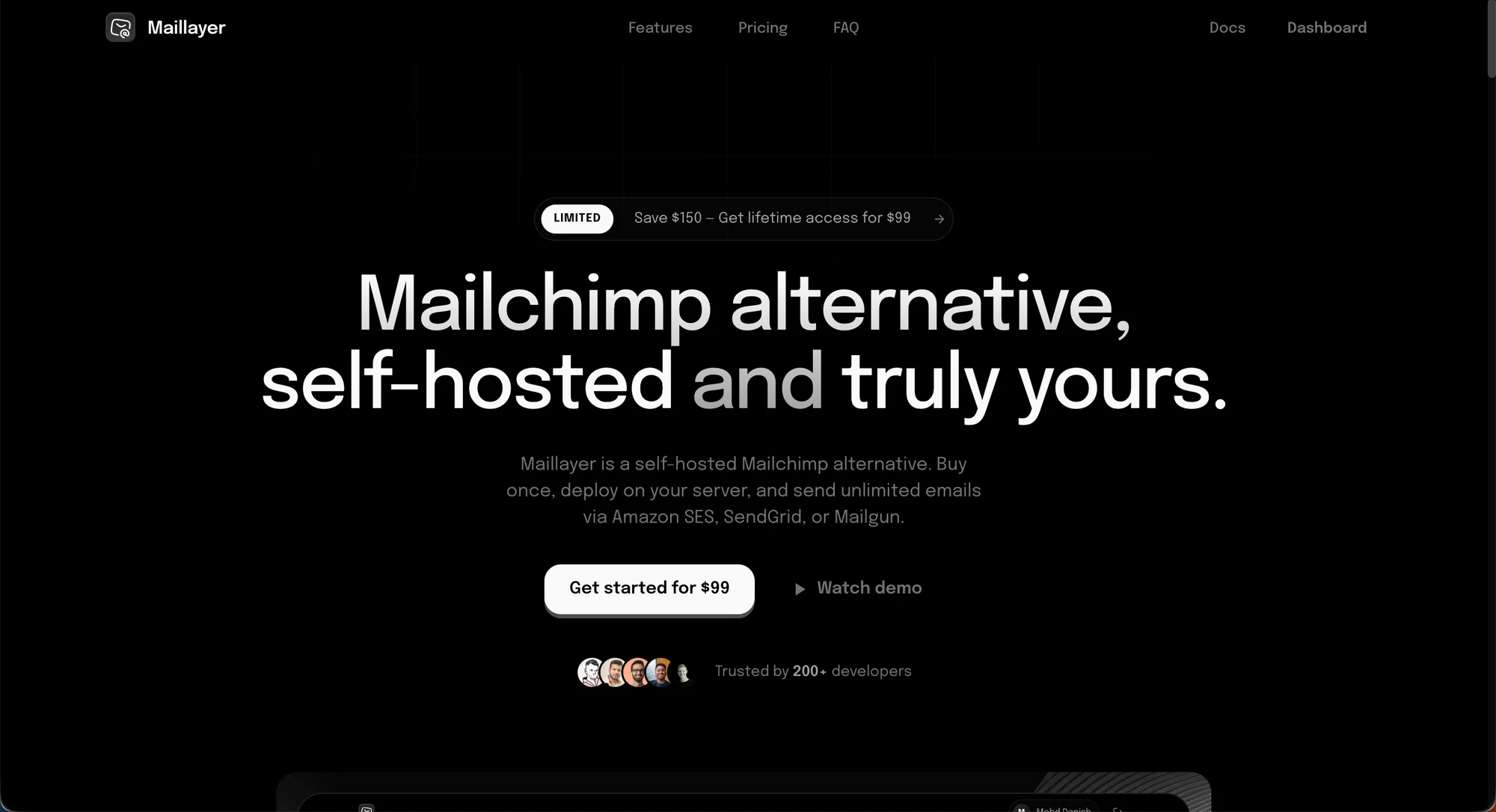
Listmonk is what most Reddit users recommend when someone asks for a self-hosted newsletter tool. It's fast, lightweight, and just works.
What makes it stand out:
Written in Go, so it's incredibly fast even on low-spec servers
Single binary deployment, runs anywhere
Handles millions of subscribers without breaking a sweat
Clean, modern interface that doesn't feel like software from 2010
Template support with variables and conditionals
Built-in analytics for opens, clicks, and bounces
Best for: Developers and technical users who want something reliable without the bloat. Perfect for newsletters and straightforward campaigns.
The catch: No visual drag-and-drop email builder. You'll work with HTML templates or Markdown. If you need a visual editor, look elsewhere.
Deploy it: Docker is the easiest route. One docker-compose.yml file and you're running.
3. Mautic
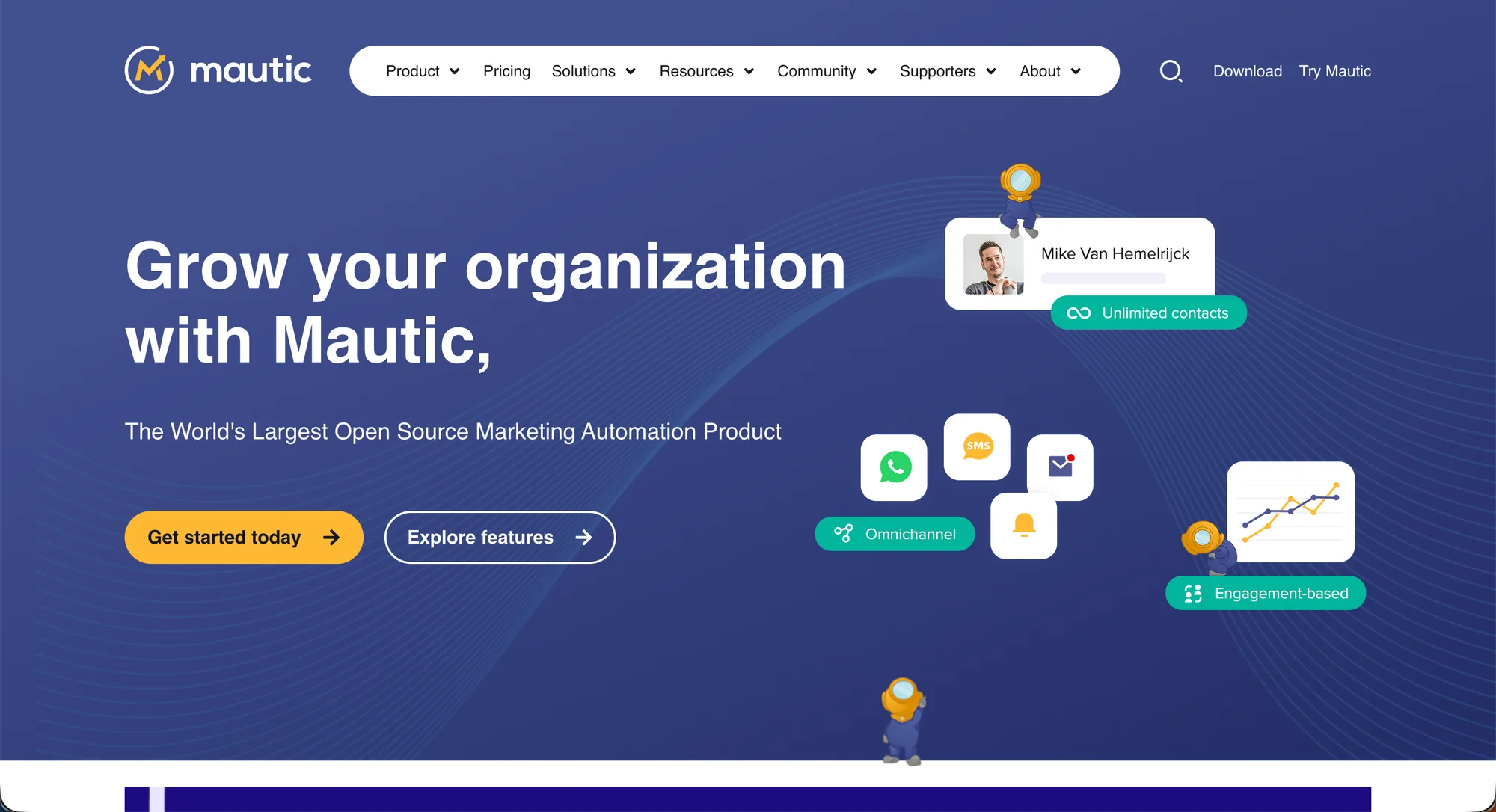
Mautic is the heavy hitter. It's not just an email tool; it's a full marketing automation platform that rivals HubSpot.
What makes it stand out:
Visual campaign builder with drag-and-drop workflows
Lead scoring and contact segmentation
Landing page builder included
Form builder for lead capture
A/B testing built in
Integrates with CRMs, social media, and hundreds of other tools
Best for: Marketing teams who need automation workflows, lead nurturing, and advanced segmentation. Nonprofits love it because you get enterprise features without enterprise pricing.
The catch: It's resource-hungry. You'll need a decent VPS (minimum 2GB RAM, 4GB recommended). Setup is more involved than simpler tools.
4. Mailtrain
Mailtrain flies under the radar but deserves more attention. It's a solid Mailchimp clone with a familiar interface.
What makes it stand out:
UI feels similar to Mailchimp, easy transition
List segmentation and custom fields
Automation workflows (in v2)
RSS-to-email campaigns
GPG encryption for subscriber data
Multiple SMTP configurations
Best for: Users who want something that works like Mailchimp without the learning curve. Good middle ground between simplicity and features.
The catch: Development has slowed down. The community is smaller than Listmonk or Mautic.
5. Postal
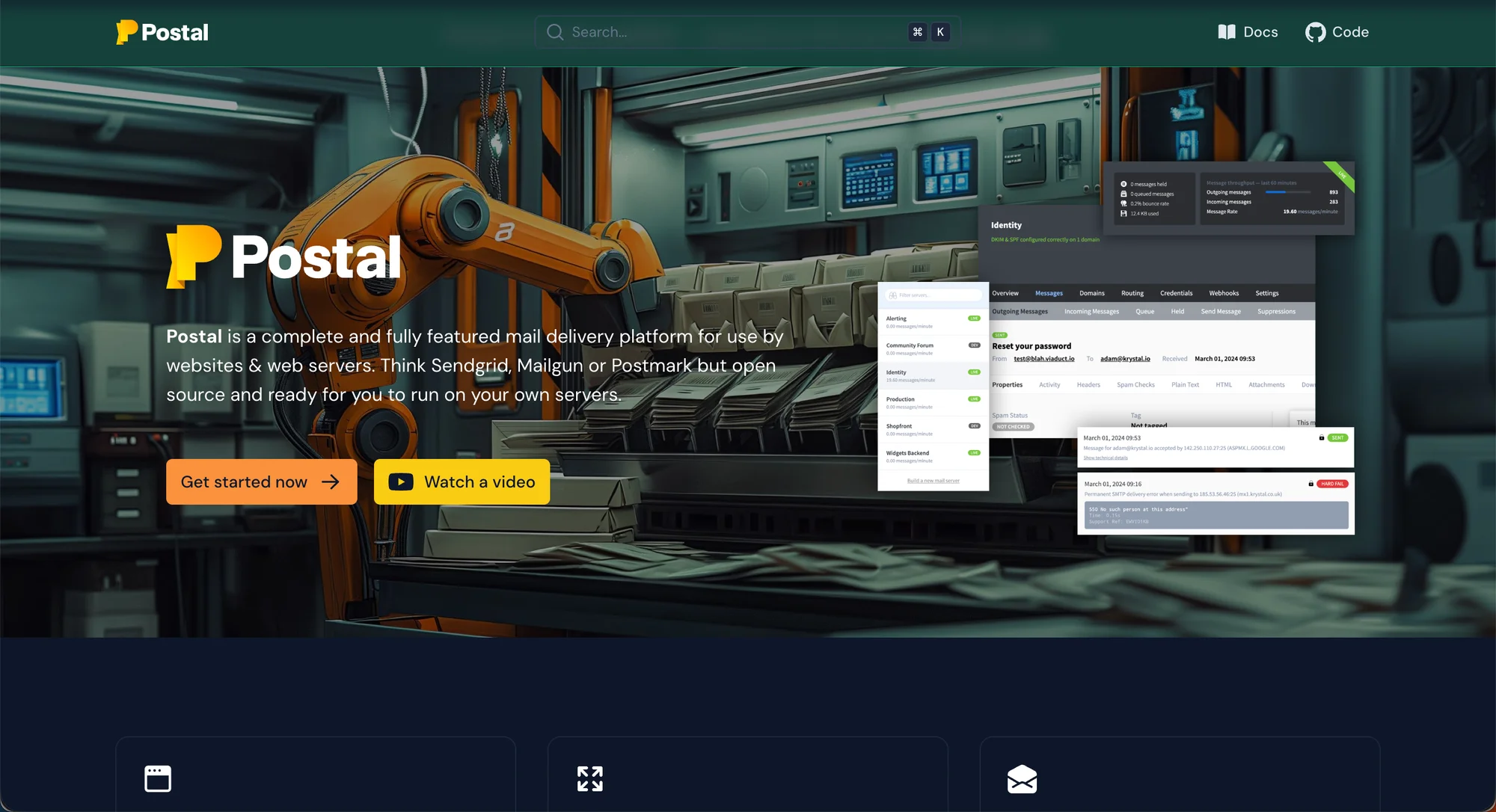
Postal isn't a marketing tool per se. It's a mail server designed for sending at scale. Think of it as a self-hosted SendGrid or Mailgun.
What makes it stand out:
Built for high-volume sending
Detailed delivery tracking and logs
Webhook support for real-time events
Click and open tracking
IP pool management
Designed to handle millions of emails
Best for: Developers who need reliable email infrastructure. Pair it with a frontend tool like Listmonk for the complete stack.
The catch: No campaign management, no subscriber lists, no templates. It's purely infrastructure.
6. Keila
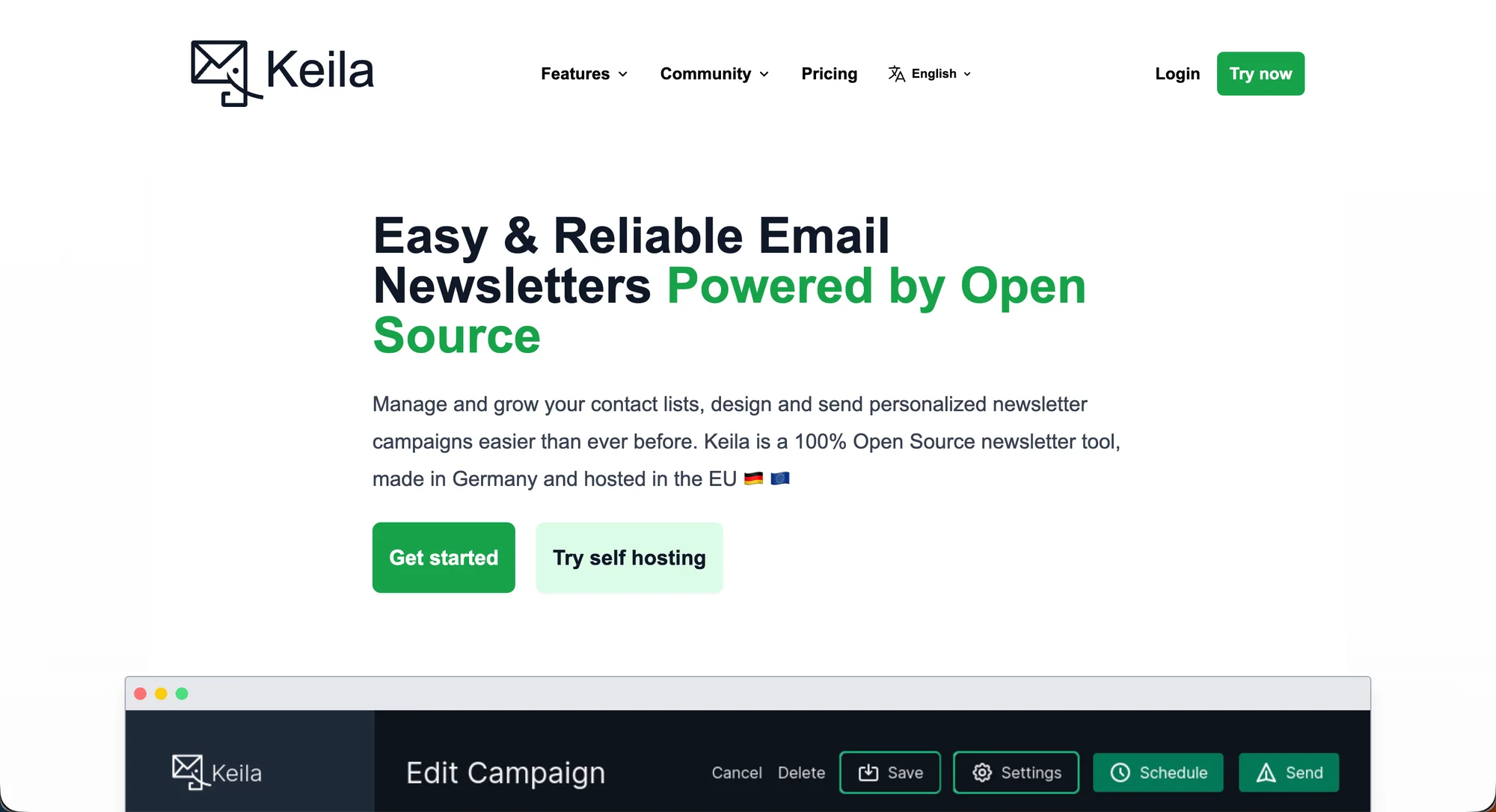
Keila is the newcomer that's gaining traction. Built with Elixir, it's designed for reliability and ease of use.
What makes it stand out:
Simple, clean interface
Markdown email editor
Segment builder with visual conditions
Built-in WYSIWYG editor (not drag-and-drop, but decent)
Easy Docker deployment
Active development and responsive maintainer
Best for: Small to medium businesses who want something simpler than Mautic but more polished than Mailtrain.
The catch: Younger project, so fewer tutorials and community resources available.
7. phpList
phpList has been around since 2000. It's battle-tested and trusted by organizations sending billions of emails.
What makes it stand out:
25 years of development and refinement
Handles massive lists (tested with millions of subscribers)
Bounce processing and list cleaning
Click tracking and statistics
Plugin system for extensions
Huge knowledge base and documentation
Best for: Organizations with large lists who need proven reliability. Universities and large nonprofits use it extensively.
The catch: The interface feels dated. It works, but it's not winning any design awards.

What About SMTP?
Self-hosted tools handle campaign management, but you still need a way to actually send emails. Your options:
Amazon SES: Cheapest at scale ($0.10 per 1,000 emails). Requires some setup but works great.
Mailgun/Sendgrid: More expensive but easier to configure. Good deliverability out of the box.
Your own mail server: Maximum control but requires expertise. Tools like Postal help here.
Transactional email services: Postmark, Resend, and others work well for smaller volumes.
Most self-hosted tools let you configure multiple SMTP providers, so you can start with one and switch later.
Making the Switch
Moving from Mailchimp isn't as painful as you might think:
Export your list. Mailchimp lets you download subscribers as CSV.
Set up your self-hosted tool. Most have Docker images ready to go.
Import your list. Every tool mentioned here supports CSV import.
Configure SMTP. Add your sending provider credentials.
Test thoroughly. Send test campaigns to yourself before going live.
Update your signup forms. Point them to your new tool's API.
The whole process takes an afternoon for simple setups, or a weekend if you're building something more complex.
Which One Should You Choose?
Pick Maillayer if: You want the smoothest transition from Mailchimp. Visual editor, automation, easy setup, and a one-time payment instead of monthly fees. Best all-around choice for most users.
Pick Listmonk if: You're a developer who wants fast, reliable newsletter sending. You're comfortable with HTML templates and want minimal overhead.
Pick Mautic if: You need enterprise-level marketing automation, lead scoring, and advanced workflows. You have the server resources to run it.
Pick Mailtrain if: You want something that feels exactly like Mailchimp and prefer familiar interfaces.
Pick Postal if: You need email sending infrastructure to pair with another tool or build your own solution.
Pick Keila if: You want modern software with active development and a clean, simple interface.
Pick phpList if: You have massive lists and need battle-tested reliability from 25 years of development.
Final Thoughts
The self-hosted email marketing space has matured significantly. You no longer have to sacrifice features or usability to escape Mailchimp's pricing.
For most people switching from Mailchimp, Maillayer offers the best balance of ease-of-use and powerful features. You get the visual editor and automation you're used to, with a one-time payment instead of endless monthly bills.
If you're more technical, Listmonk is excellent for newsletters. And if you need enterprise marketing automation, Mautic has you covered.
Whatever you choose, you'll own your data, control your costs, and never worry about another pricing change notification.